Powered By Blogger
Showing posts with label Fall of Baloch Confederacy. Show all posts

Sunday, May 11, 2014

Baloch Leaders of Pakistan

Baloch Leaders of Pakistan?

This post is covering only Baloch Presidents and Prime Ministers of Pakistan???/Baloch PMs and President Of Pakistan
1. Farooq Leghari (President) : (29 May 1940 – 20 October 2010), was eighth President of Pakistan, serving from 14 November 1993 until his resignation on 2 December 1997. He also served as Minister of Foreign Affairs from 19 October 1993 to 14 November 1993.
2. Asif Ali Zardari (President) : is the 11th and current President of Pakistan. He is co-chairman of the ruling Pakistan Peoples Party (PPP) and the widower of Benazir Bhutto, who served two nonconsecutive terms as Prime Minister.??
3. Ghulam Mustafa Jatoi (Prime Minister): (14 August 1931 – 20 November 2009) was the Acting Prime Minister of Pakistan for three months, from August 6, 1990 to November 6, 1990. He also served as Chief Minister of Sindh from 25 December 1973  to 5 July 1977
4. Balakh Sher Mazari  (Prime Minister): As the Chief of Mazaris he holds the title of Mir. He remained in Prime Minsiter of Pakistan office from 18 April 1993 to 26 May 1993.??
5. Zafarullah Khan Jamali (Prime Minister): Served as the thirteenth Prime Minister of Pakistan from 2002 until his resignation in 2004.He also served as the Chief Minister of Balochistan in two non-consecutive terms from June 1988 to December 1988, and 1997 to 1996.
6.Mir Hazar Khan Khoso : was the 23rd and caretaker Prime Minister of Pakistan, from 25 March 2013 to 5 June 2013. A jurist, Khoso is a retired Judge who previously served as the Chief Justice of the Federal Shariat Court and se2013rved as the interim Prime Minister ahead of the general elections scheduled in May, 

Tuesday, May 6, 2014

Humanity is Calling?

                      Humanity is Calling?


Latf Johar BSO_A
Life every man holds dear; but the dear man holds honor far more precious dear than life. William Shakespeare?????
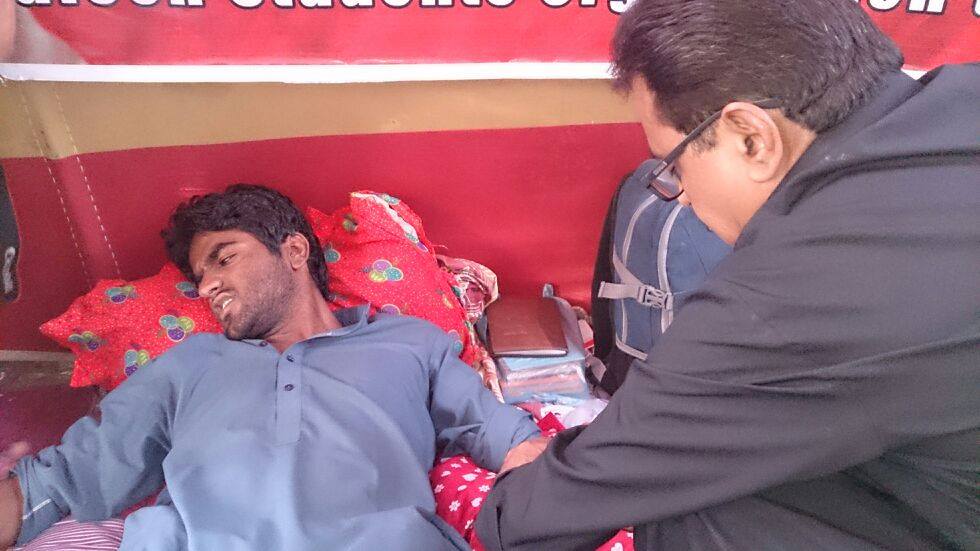
This is exactly what Latif Johar is doing rights now by observing “Hunger Strike till Death” against the illegal abduction of Zahid Baloch, Chairman of BSO-Azad by Pakistani Law Enforcement Agencies on March 18, 2014 from Quetta. His abduction is witnessed by Kareema Baloch and other BSO leaders who were coming out of a meeting when they were stopped by Frontier Corps personnel. They took him away after a few minutes of on-spot interrogation.???
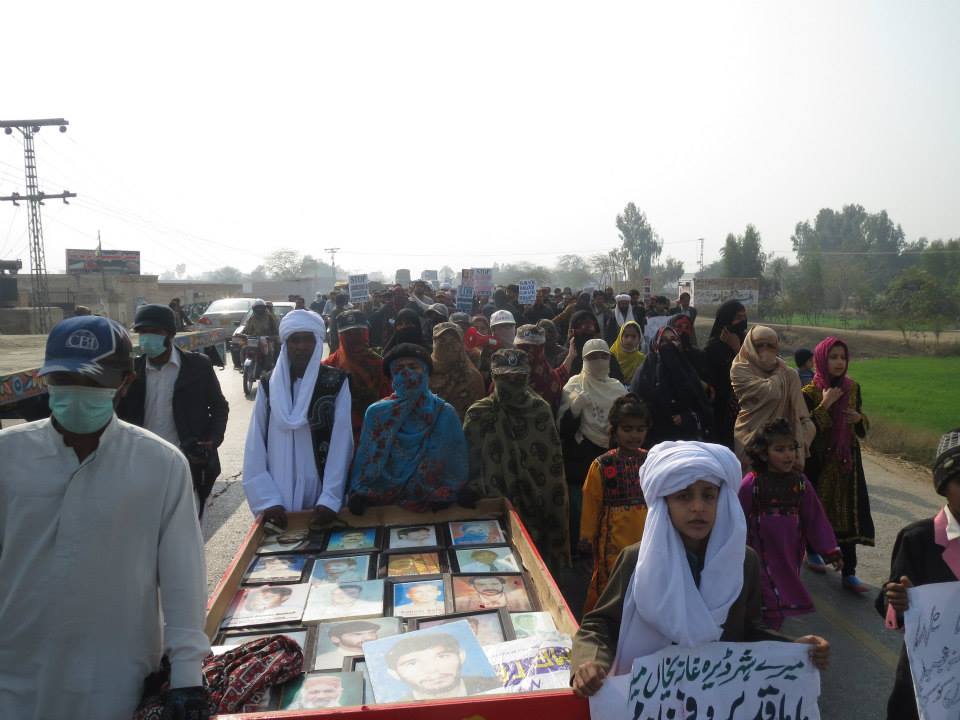
Though issue of Baloch Missing Persons has been registered in the Supreme Court of Pakistan but nothing has been done so far. 2000 km long march from Quetta to Karachi and Karachi to Islamabad by the families of Baloch Missing Persons failed to get attention of the Pakistan Government and media. Even the campaign on social media against the illegal abduction and extra judicial killing by Pakistani law enforcement agencies has only bring the awareness in Pakistan community but no practical steps have been taken to ensure the safety of Baloch Missing Persons. This clearly indicates the power and dominancy of Pakistan security agencies over the government, judiciary and media.
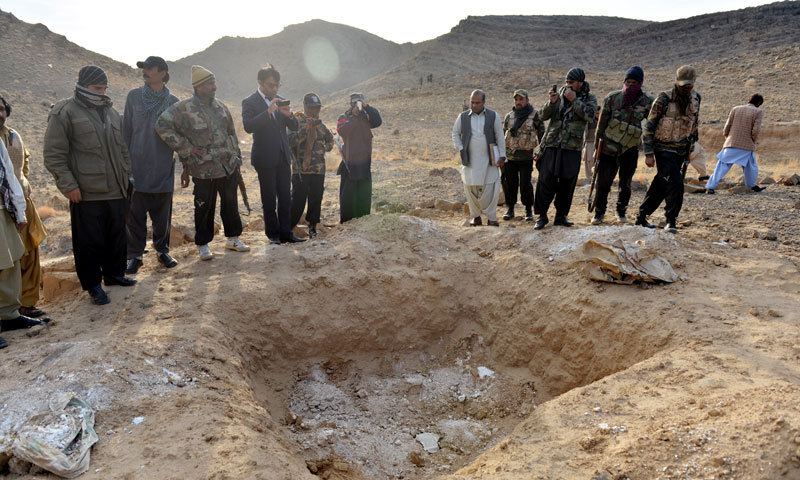
Balochistan Mass GraveOn January 25, 2014 discovery of mass graves from Tutak, Khuzdar with 103 decomposed bodies are claimed to be of the Baloch Missing Persons; Government officials confirmed that the bullet-riddled bodies have been dumped in unmarked graves — many of them considered to be mass graves exposes the gross human rights abuses perpetrated by the security forces over the years in a bid to suppress a popular uprising against the government. Discovery of mass graves is still a mystery as media coverage was, and is prohibited in this regard./???????/
According to the Commission on the Inquiry of Enforced Disappearances, the total number of cases currently stands at 621. However this figure is contested by Nasrullah Baloch, the chairperson of the Voice for Baloch Missing Persons. According to him 23,000 is the number of registered cases. From this, a whole 14,000 came during the current government’s tenure.?????
vbmplongmarch-0003To mention here, Pakistan’s well known journalist Hamid Mir who received 6 bullets on April 19, 2014 – in his recent statement held ISI responsible of the attack for covering Baloch Missing Person’s long march. According to The Centre for Research and Security Studies (CRSS), at least 22 journalists have been killed in the province during the past four years.
In this scenario, Baloch are completely disappointed with Pakistan government, judiciary, and media. The powerful law enforcement agencies only reply to these human right violations in Balochistan is more abduction and more killing. Discussing Balochistan issue in Pakistan means calling your death!????????/
As Pakistan has failed miserably in 64 years to resolve Balochistan conflict, therefore under such circumstances, the only hope of justice for Baloch is The Office of the High Commissioner for Human Rights, Amnesty International, Human Rights Watch, Special Adviser on the Prevention of Genocide,and other human right organization to step in and take notice of the massacre in Balochistan. Disheartened from Pakistan, Baloch needs and have right to live. They are human too and human right organizations must intervene and prove that they do exist to save humanity?????????

Baloch Hisotry?

             Baloch Hisotry?

Balochistan is between Iran, Pakistan and Afghanistan. It traces its history from times immemorial. Before the birth of Christ, it had commerce and trade with ancient civilization of Babylon through Iran and into the valleys of Tigris and Euphrates. Alexander the Great also had an encounter with the Serbia tribe of Balochistan.????
A Balochi war song describes the province of Balochistan thus: “the mountains are the Balochi’s forts; the peaks are better than any army; the lofty heights are our comrades; the pathless gorges our friends. Our drink is from the flowing springs; our bed the thorny bush; the ground we make our pillow.”?????
Balochistan is a land of contrast. It has places with rugged mountains like Chiltan, Takatu, Sulaiman, Sultan etc. and plains stretching hundreds of miles. It has fertile land such as in Nasirabad and the tracks which are thirsty for centuries in the Pat section of Sibi district and the Makran desert zone. It has hottest places in the country like Sibi and the cool towns like Quetta, Ziarat, Kan Mehtarzai and Kallat where temperature goes below freezing point and these areas remain under a thick cover of snow in winter.???????
Balochistan (or Baluchistan), also known as “Greater Balochistan” is an arid region which sits on the Iranian Plateau in Southwest Asia, presently split between Iran, Pakistan and Afghanistan. The area is named after the numerous Baloch (or Baluch, Balouch) tribes, an Iranian people, who moved in to the area from the west some time around 1000 A.D. The southern part of Balochistan is known as Makran.?????????
Before the arrival of the Baluch, the region was populated by Pashtuns and Brahuis. The Pashtuns are now concentrated in Sibi, Bolan, Quetta, Pishin, Killa Abdullah, Killa Saifullah, Loralai, Zhob, Ziarat and Harnai. Many Brahuis live in Kalat. Languages spoken in the region include Balochi, Pashto, Persian, and Brahui.
Recent History?????????
Pakistani Balochistan was conquered by the British Empire on October 1, 1887. In 1948, it became part of Pakistan. Since then, some separatist groups in the province have engaged in armed violence, first led by “Prince Karim Khan” in 1948, and later Nawab Nowroz Khan in 1968. These tribal uprisings were limited in scope. A more serious insurgency was led by Marri and Mengal tribes in 1973-1977. They have a view of “Greater Balochistan,” presently split between Iran, Pakistan and Afghanistan as one independent state ruled under tribal jirgas (a tribal system of government).
Accession Problem 1948???????/
The ruler of the Khanate of Balochistan, Mir Ahmad Yar Khan,might have been coerced by Jinnah to sign the document of accession. Balochi nationals support this claim, however critics dispute such claims as unrealistic and contrary to popular support for Jinnah, as the Khan of Kalat ruled even after death of Jinnah with the support of the government. However, The Khan was not an absolute monarch; he was required to act under the provisions of the Rawaj (the Baloch constitution).???????/
The incorporation of the Khanate resulted in a few anti-Pakistani rallies and meetings in certain areas of the Khanate. To subdue the anti-Pakistani sentiments, the Army of Pakistan was placed on alert. The Government of Pakistan decided to take complete control of the administration of Balochistan (Khanate) on 15 April 1948. The A.G.G. in Balochistan conveyed the orders of Mohammad Ali Jinnah that the status of the Khanate, “would revert back to what it was during the preceding British rule. Besides the policy of the central government of Pakistan towards the Khanate, Jinnah also refused to give Autonomy to Balochistan.”?????
In April 1948, several political leaders from Balochistan such as Mohammad Amin Khosa and Abdul Samad Achakzai were arrested. The Anjuman-i-Watan Party (pro-congress), headed by Samad Achakzai, was declared unlawful.
First Baloch National Resistance 1948?????//
Prince Abdul Karim Khan
The refusal to grant autonomy and the continued existence of the Sandeman system re­sulted in unrest. Thus, on the night of 16 May 1948, Prince Abdul Karim Khan, the younger brother of the Khan, decided to lead a national liberation movement.
He invited the leading members of nationalist political parties, (the Kalat State National Party, the Baloch League, and the Baloch National Workers Party) to join him in the struggle for the creation of an independent “Greater Balochistan”. Apart from his political motives, the Prince was a member of the royal family and the former governor of the Makran province; the recognition of Sardar Bay Khan Gichki as a ruler of Makran by Pakistan upset him.
Beginning of Movement and Allies?????///
He decided to migrate to Afghanistan in order to get help and to organ­ize the liberation movement. Prince Karim wrote to the Khan on 28 June 1948 ex­plaining the causes of his migration.
Some of the prominent political leaders who joined him were Mohamed Hussain Anka (the secretary of the Baloch League and the editor of Weekly Bolan Mastung) • Malik Saeed Dehwar (the secretary of the Kalat State National Party) • Qadir Bakhsh Nizamami, a member of the Baloch League and prominent members of the Communist Party, Sind-Balochistan branch, and Maulwi Mohd Afzal, a member of Jamiat-­Ulm-e-Balochistan.
Plan of Action???????
The Baloch Mujahideen ( Baloch Holy Warriors), as they called themselves, entered Afghanistan and encamped at Sarlath in the Province of Kandahar. During their stay, the Baloch freedom fighters adopted the following measures to achieve their goal:
Sending of messages to the Baloch chiefs of Eastern and Western Balochistan asking them to join in the armed struggle;
Running of a truth revealing campaign in Balochistan, aimed at the educating the locals, teaching them to fight for their right,and fight as well as the enlistment of a national liberation force;
Searching for international support, particularly from contries who are supportive of democratic process and don’t support army ruling over the country.
Messages were sent to Mir Ghulam Faruq of the Rudini tribe, Sardar Mehrab Khan, Sardar Mir Jumma, Mir Wazir Khan Sanjrani of Chagai, and several other chiefs. The propaganda campaign was to be carried out on two fronts: (A) The National Cultural Front. (B) The Religious Front.
Armed Struggle????
Besides the cultural and religious campaign, the Prince also organized a liberation force called the Baloch Mujahedeen, consisting of the ex-soldiers and officers Of the Khanate’s army. The Prince was chosen as the supreme commander.
The Prince issued an appeal to personages to help with the recruitment. A person re­cruiting 100 men was offered the rank of a major and a person recruiting 50 men was entitled to the rank of captain. The Baloch liberation army had a secret agency called Jannisar (devotee), whose duty was to provide information, destroy the communication system, and watch the activities of traitors. In addition to this, there was a secret unit Janbaz (darer), to kill all traitors. The Janbaz were subordinate to the Jannisar. The headquarters of the agency was known as Bab-i-Aali (secret war-office) and headed by prince Karim. The total strength of Jannisar was recorded to be 30, while nothing is known about the strength of Janbaz.
Soviets and Afghans???????
However, the Prince did not start a war of liberation because of Afghanistan’s re­fusal and the silence of the Soviet Union concerning assistance. During his stay in Sarlath, Prince Karim appointed Malik Saeed and Qadir Bakhsh Nizamani as his emis­saries to contact the Afghan Government and to approach other embassies in order to get moral and material support. According to Nizamani, the Afghan authorities refused to provide any sort of help and told them either to reside as political refugees at Kandahar or to return. The Afghan authorities also re­fused to permit the rebel group to operate from Afghan soil. Nizamami informed the Iranian Embassy of the Baloch demands as well.
Iranian diplomats showed their concern but did not offer any assistance, though they indicated their desire to provide, asylum to the rebel group in Iran. The last hope of the Prince’s re­presentative was the Soviet Embassy. The Soviet diplomats listened to Nizamami carefully. Though they did not give any assurances, they did promise to inform Moscow. The Afghans, since the rise of Ahmad Shah, had treated Balochistan as a vassal state until the Baloch-Afghan war in 1758, when an agreement of ‘non-interference’ was signed between the parties. In the 19th century, Afghan rulers like Shuja and Amir Abdur-Rehman desired to occupy Balochistan. In 1947, the Afghan Government demanded the creation of Pashtunistan. Stretching from chitral and Gilgit to the Baloch coast in the Arabian Sea.The Afghan Go­vernment called Balochistan ‘South Pashtunistan’ in statements and publications. The Afghan expansionist policy reflected the economic considerations of a landlocked state. At the same time, it was impossible for the Afghan Government to neglect its own national interests and to support the movement of an indepen­dent Greater Balochistan,which claimed the Baloch region in Afghanistan. Stalin did not pursue Lenin’s policy in the East. Moreover, government of the Soviet Union was not ready to annoy the Afghans or the British, opponents of an independent Balochistan.
Prince Karim’s Legitimacy outlawed
Meanwhile the Prince and his party were regarded as a rebel group by a Farman royal order issued by the Khan on 24 May 1948, stating that no connection of any sort with the Prince and his party should be maintained nor should they be helped with rations, and that if any member of the rebel group committed an offence, he would be punished. The Government of Pakistan moved the army to the military posts of Punjab. Chaman chashme,and Rastri near the Afghan borders aiming to control the rebels’ rations, which were being sent by the pro-liberation elements, as well as to control their activities or any attempt to invade. The Pakistan au­thorities confirmed two clashes between the army and the liberation forces.
To avoid popular unrest in Balochistan, the Khan sent his maternal uncles Hajji Ibrahim Khan and Hajji Taj Mohammed at Sarlath to bring Prince Karim back to Kalat. Khan made his return conditional . The Prince and the liberation movement failed to achieve internal and external sup­port. Moreover, the Baloch nationalists were divided into two groups.Anqa and Malik Saeed favored armed struggle in the form of guerilla war, while Mir Ghous Bux Bizenjo and other prominent leaders wished to resolve all issues with dialogue.
The Return of Prince Karim
The Prince was forced to return to the Khanate and negotiate for his demands peacefully. On 8 July 1948, when the news of the Prince’s arrival reached Kalat, the Prime Minister, Mr.Fell, accompanied by a Kalat State Force, went to meet the Prince at Earboi to deliver the Khan’s message.
His Capture
Abdul Karim entered Balochistan with Afghan help and organized a rebellion against Pakistan in the area of Jallawan with the aid of Mir Gohar Khan Zahrri, an influential tribal leader of the Zarkzai clan. Further, it is stated that Major General Akbar Khan, who was in charge of the Seventh Regiment, was ordered to attack the insurgents and forced them to surrender. Prince Karim with his 142 followers were arrested and imprisoned in the Mach and Quetta jails. A detailed and interesting statement comes from General Akbar Khan, in his article published in the daily ‘Dawn’,dated 14 August 1960, under the title: “Early reminiscences of a soldier’. General Akbar confirms here that there was a plan to invade the Khanate and describes the clash between the Pakistan army and the liberation force headed by Prince Karim. Akbar says that Jinnah had issued instructions that this news should not be published in the press.
Trial and Sentencing
After the arrest of the Prince and his party, the A.G.G. gave an order for an inquiry, to be conducted by Khan Sahib Abdullah Khan, the Additional District Ma­gistrate Quetta. He submitted his report on 12 September 1948. His report was based on the activities of the Prince and upon the letters and documents published by the liberation force. After the inquiry, R.K.Saker the District Magistrate at Quetta, appointed a special Jirga (official council of elders) consisting of the following persons:
1. Khan Bahador Sahibzada, M.Ayub Khan Isakhel, Pakhtoon from Pishin;
2. K.B. Baz Mohd Khan. Jogezai, Pakhtoon from Loralai;
3. Abdul Ghaffar Khan Achakzai, Pakhtoon from Pishin;
4. S.B. Wadera Noor Muhammad Khan, a Baloch Chief from Kalat;
5. Syed Aurang Shah from Kalat;
6. Sheikh Baz Gul Khan. Pakhtoon from Zhob;
7. Wahab Khan Panezai, Pakhtoon from Sibi;
8. Sardar Doda Khan Marri, Baloch from Sibi.
The Jirga was instructed to study the circumstances and events which led to the revolt and was asked to give its recommendations to the District Magistrate. On 10 November 1948, the Jirga heard the testimony of the accused and gave its recommendations to the D.M. on 17 November 1948, suggesting the delivery of the Prince in Loralai at the pleasure of the Government of Pakistan and various other penalties. The D .M., in his order dated 27 November 1948, differed with the opinion of the Jirga and sentenced the Prince to ten years of rigorous imprisonment and a fine of Rs 5000 other members of his party were given various sentences and fines. Thus the Pakistan Government crushed the first armed struggle by Balochi insurgents.

Wednesday, April 30, 2014

RAJANPUR TO D.G. KHAN--BALOCHISTAN, BALOCHISTAN

            RAJANPUR TO D.G. KHAN--BALOCHISTAN, BALOCHISTAN

Written By: Hamid Ali Baloch
The name Dera Ghazi Khan denotes that it was founded by the cousin of Mir Chakar Khan the great, Ghazi Khan Rind. The Mirwani sub-tribe of Rind ruled over Dera Ghazi Khan for approximately two centuries. The area of Rajanpur had been a part and parcel of Dera Ghazi Khan for centuries but Dera Ghazi Khan was bifurcated and Rajanpur was made a new district.
There are several tribes residing on the suburbs of Dera Ghazi Khan and at Rajanpur district, but they are the attached parts of the leading tribes, such as Leghari, Mazaari, Buzdar, Qaisrani, Notkani, Khosagh, Dreshk, Gorchani, Lashari, Malghani, Gishkori, Patani, Tangwani, Balwani, Rahmani and Jawar.?????????
Dera Ghazi Khan had been a part of the Baloch Confederacy during the era of the Khanate of Kalat Mir Naseer Khan Noori, the great Khan of Kalat. In 1872, Raja Ranjeet Singh occupied the plain areas of Dera Ghazi Khan, but the Baloch tribal chiefs of Koh-e- Sulaiman became united and fought against the army of Raja Ranjeet Singh. The army of Ranjeet Singh retreated and went backward but the Baloch armed persons occupied the hill stations to protect their land. The Baloch people still consider the hills as their forts.????????
When the British army occupied most parts of the sub-continent including the Sindh and NWFP, a Jirga system was also implemented for the Baloch tribes of Koh-e- Sulaiman. Meanwhile, the English army constructed a fort in Fort Monroe to make a strategy to occupy the hills of Koh-e- Sulaiman. In Fort Monroe, a Jirga Hall was being constructed for the Balochs of Dera Ghazi Khan, Dera Bugti, Kohlu and Barkhan.???????
The chief tribal leaders reconciled with the English army taking bribes and each tribal leader made an administrative force for themselves that is called Border Military Force. In 1954, the Deputy Commissioner has issued an order to the boot-licker tribal chiefs of English era to sign an agreement of annexing the Dera Ghazi Khan area in to Punjab, but the tribal chief Sardar Manzoor Ahmad Qaisrani rejected this decree from the Deputy Commissioner, meanwhile some other tribal chiefs signed the agreement in fear, because they did not want to lose their land which were in Mian Chunnu, Punjab. These properties were rewarded to the chiefs of Koh-e- Sulaiman by the British men and in return the British men divided the area of Dera Ghazi Khan into two administrative portions, which was called tribal and settled areas. """"""""""
The Koh-e- Sulamian area was considered as tribal area and it was also called as de-excluded area. The total population of Koh-e- Sulaiman, which covers 2500sq/miles of the Koh-e- Sulamian area, speaks Balochi Language, on the Plain areas the population is mixed up into Balochi and Saraiki or Lahenda. The Koh-e- Sulaiman area of Dera Ghazi Khan has neither been a part of Raja Ranjeet Singh’s rule nor the part of British rule. God has bestowed an enrichment of oil and gas stock to this part of land. This may be the second enriched area for oil and gas after Sui of Balochistan. 
The areas of Qaisrani tribe, which are called Dhodark, Rodo and Apiband, where a huge stock of crude oil and gas have been explored and these are being used in the factories and Industries of Punjab, but the local people are deprived of this wealth. Besides, a huge number of Uranium, Gypsum, Cement which are the key wealth of Dera Ghazi Khan, but Punjab is enjoying these natural resources in its industries.???????
Some of the high-handed persons have stressed the government to annex the enriched areas of natural resources of Koh-e- Sulaiman to the Saraiki belt and make a new province. It’s a sorry state that the Baloch nationalist leaders are entirely unaware of the historical, geographical, defense and lingual importance of Dera Ghazi Khan, because Balochistan is itself suffering a lot in this scenario and they can not listen to the voices of their brothers of Dera Ghazi Khan. The Balochs of Dera Ghazi Khan have been the part and parcel of the Baloch National Movement, whether it may be in the shape of Haidarabad conspiracy case, or the case of Mir Ghous Bakhsh Bezenjo, either it be the case of Nawab Khair Bakhsh Murree or Sardar Atta Ullah Mengal, in each and every moment the Balochs of Dera Ghazi Khan have been the part of Baloch National Movement and still supporting their brothers of Balochistan morally. ?????????????//
Sardar Akhtar Jan Mengal has pointed out that the Baloch will never quit or give up the area of Dera Ghazi Khan. The tribal chief of Qaisrani tribe and the minister of Punjab Assembly, Mir Badshah Qaisrani delivered his speech in the Punjab Assembly and expressed his thoughts that if there would be a province of Saraiki speaking people, the area of Dera Ghazi Khan will never be the part of Saraiki Province, because the Baloch have their own national identity, a vast geography, history and a language from thousand of years and the Dera Ghazi Khan will remain a part of Balochistan. 
He has threatened the supporters of the Saraiki province that if there is an idea for a Saraiki Province, then the Saraikis should not forget the history of the Baloch Nation.????????
Ironically, some high authorities from Punjab have boosted up slogans for a Saraiki province to destabilize Balochistan and the Baloch people, because Baloch are suffering a lot in their own province.
Today, the Baloch nation is facing a catastrophic loss and some boot-licker leaders of the Baloch People are in the hidden camps of the enemy to destabilize the Baloch People. It’s a hard time and a challenge for the Baloch leaders to understand the grievances of the Baloch people and try to resolve them and become the part of the same body. It’s also the time to give the Baloch people a national identity on its own land.""""""""""

Sunday, April 27, 2014

Voice of a Baloch

  • My sincere thanks to all who have addressed the Baloch issue in this forum. However, Pakistanis are forgetting that through brute force, they occupied an independent country, Balochistan, on March 28, 1948; i.e. 7 months after Pakistan’s independence from British rule!?????????????
    Unfortunately, the history books for the masses shroud the fact that Pakistan occupied Balochistan. But, in military and civil services schools across Pakistan, they probably teach every officer not to trust a Baloch (as apparent from their apathy towards Balochistan). The personnel of the armed forces and the bureaucracy know it very well that the Baloch nation will rise again and demand their freedom if their area was developed and their people were educated. Hence, throughout the period of its occupation of Balochistan, Pakistani governments (both civil and military) have treated it as an occupied territory and usurped its resources to benefit all of Pakistan (excluding Balochistan, of course).????????
    This ìRape of Balochistanî by Pakistan shall not last forever. Although we have been patient over the years about the plight of Baloch nation under the plundering Pakistani rule, the gang rape of our lady guest by members of the Pakistani rulers disregard all norms of decency in our Baloch culture. Therefore, it is our cultural norm to rise in unison against tyranny. The current political turmoil in Balochistan was a result of cultural clash, which has now escalated into a war for our freedom.???????????
    The rule of governance in Balochistan may favor the Sardari Nizaam, which is suitable to our culture and have served our peopleís needs over centuries. To date, the ground reality is that we have not found any substitute to this governing method which resolves our peopleís grievances in an expeditious and equitable manner. If, at any time, we the Baloch people find the Sardari Nizaam obsolete, we shall practice a new method of governance of our choice.?????????
    Although we have been defeated in the past and may be defeated again, but we will never stop dreaming about being ìfreeî. To restore our freedom, we, the Baloch, fought four (4) wars with Pakistan since the occupation of our country; and each time, due to lack of resources, we lost, but we have NOT surrendered yet. And, to remind all concerned, we have great hope to have our own country where we could practice political freedom and be considered first-class citizens again. So, any Baloch who has an iota of pride in his/her ethnicity will strive for the freedom of the Baloch nation, no matter how much blood is shed or how long it might take to achieve our goal.//???????????

The Baluchistan Issue

                     The Baluchistan Issue

So, what is going on in Baluchistan? Baluchistan is one of the 4 states/provinces of Pakistan. It constitutes roughly 40-43% of the land mass with only 5%-7% share in the population. It has the richest mineral and natural resources in the country, yet, is the most improvished area of Pakistan with the lowest literacy, health and infrastructre indices. Two days ago, “tribals” or “nationalists” or “foreign interests” launched an attack on the largest natural gas production facility in Sui, Baluchistan. This has halted the supply of natural gas to most of the country resulting in material and economic losses. The escalation comes after on-going sporadic violence in the region against the Pakistani military forces. The General unequivocally warned the tribal/nationalist/foreign elements that his retaliation will be swift and that “they will not even know what hit them”./.???????
This has set the stage for a show-down between Pakistan military and what the Pak media is terming “terrorist organizations” like the Baluch Liberation Front and Baluch Liberation Army. At least Jang Daily expressed severe doubt in their editorial about the mere existence of these organization (which is the usual hint that India is behind it all). If they, uh, google’d it, they would know that not only do these organizations exist and have a fairly comprehensive web presence but that their greivances are long standing and, at least to this Punjabi/Kashmiri, fairly justified.???????

Let me start with a bit of history. The region was largely under Iranian kingly control and the autonomous principality of Kalat. The British wrested control away from the Khan of Kalat in the early 1840s and it became the staging ground for the various Afghan-British wars (the Great Game) in the later half of 19th century. The 1876 treaty between the Khan of Kalat and Robert Sandeman accepted the independence of the Kalat as an allied state with British military outposts in the region. After the 1878 Afghan War, the British established Baluchistan as a provinicial entity centered around the municipality of Quetta – Kalat, Makran, and Lasbella continuing to exist as princely realms. The British interest in the region was largely to use it as a land-mass bulwark against Central Asian encroachments. Besides a train track, the development and settlement of British holdings excluded most of the tribal population. The administrative and legislative reforms of late 19th and early 20th century India overlooked Baluchistan. Around the 1930s, Baluchi nationalist parties emerged to contest for freedom from British rule. They took the princely state of Kalat as the focal point of a free and united Baluchistan. Iqbal’s vision of autonomous federation of Muslim state included Baluchistan but the Khan of Kalat never brought into the Punjabi nationalist paradigm, arguing that the Kalat had special treaty powers. Baglar Begi Khan declared the independence of Kalat on August 15, 1947. He assured the neo-state of Pakistan that Kalat will participate in the defense and infrastructure but will be autonomous. That didn’t go over well at all and the Pakistani army entered the region to occupy the area immediately. On Mar 27, 1948, the Khan of Kalat gave in to the State of Pakistan and his old attorney M. A. Jinnah. His brother Abdul Karim Baloch refused to surrender and revolted until his arrest in 1950. Baluchistan was put under Governor General control and no elective body formed in Baluchistan until 1973.?????????????/
After Partition, the threat of E. Pakistani – read Bengali – hegemony (55% of population at the time), forced the Punjabi military and civil elite (in 1947, Punjabis made up 77% of the army being only 25% of the population) to consitute W. Pakistan as One Unit in the 1956 Constitution. This was done presumably to guarantee equal representation for W. Pakistan but the measure was highly unpopular in Sindh, Baluchistan and NWFP because it meant rule of the Punjabi over their regional interests. Separatist, sub-national movements triumphing local languages and cultures and protesting Punjabi hegemony arose in all the three states. Especially in Baluchistan, the Khan of Kalat led a stringent opposition to the One Unit. But the wave of military dictatorships quashed all such designs. In 1970, Yayha Khan dissolved the One Unit to appease E. Pakistan but the horrific damage done by the army in soon-to-be-Bangladesh proved too much.??????????????
After 1971, the sub-nationalist movements in Sindh and Baluchistan demanded their fair share of the nationalist pie. With Bangladesh’s independence, Punjab became the most populous and richest state in the country. It had 58% of the population while Baluchistan had 4%. Led by Bhutto’s central populism, Baluchistan had its first elected body in 1972. The National Awami Partywon the majority of the seats in Baluchistan and started making noises about state rights. In 1973, it was clear to the NAP that Baluchistan was the least developed province with the majority of civil and military bureaucracy coming from Punjab. They, quite correctly, saw this as a colonial exploitation. The discovery of natural gas reserves at Sui had made the area incredibly vital to Pakistan and Iran’s developmental programs. The refusal by the Bhutto’s central government to allow NAP internal autonomy escalated a tense situation into an outright revolt. Bhutto dismissed the Baluchistan assembly and re-instituted Governor’s rule. The Baluchi nationalists launched an all-out military resistance.//////////////
From 1973-1978, roughly 60,000 Baluchi tribesmen and militia have faced off against the Pakistani army. Iran, eager to quell any similar uprising in its bordering area, has contributed airforce and personnel to the Pakistani efforts. They bombarbed Baluchi villages into submission. Bhutto’s ouster, via Zia’s military coup, forced a calm onto the situation as Zia launched into his One Pakistan Through Islam program. The Afghanistan war, the Iranian revolution and the Zia’s policies made Baluchistan into an island of outsider activity. US/UN aid for Afghani refugees poured into the metropolitan areas. During the 90s, the Benazir/Nawaz Sharif governments did little for Baluchistan as the Baluchi nationalist parties floundered in exile.//////////
After The General landed into power (get it?), he tried to foster new relationship with Baluchistan. Over the last three years, the Kachhi Canal, Mirani Dam, Gwadar Port, Makran Coastal Highway, Saindak Copper Project and Quetta Water Supply Scheme were announced by Islamabad. Over 300 percent increase was made in the national budget for development programs in Baluchistan. Yet, all these things have failed to materialize from paper into concrete.""""""""""
These latest incidents emerge from the same calls for Baluchistan’s equal share in the national programs and right to self-administer. The catalyst seems to be the assault on a female doctor, Dr. Shazia Khalid, by a gang of employees of the PPL at Sui. The company management, along with the local police, tried to quash the issue while the central authorities ignored all pleas to intervene. This caused the initial attack on the Sui facility. Nawab Akbar Bugti, the leader of Democratic National Party Baluchistan, clearly stated that the attack was borne out of frustration on the lack of action against the employees who did the assault and was NOT a nationalist struggle for freedom by the tribals. The General, on the other hand, is going to play this as another internal/extrenal threat to Pakistan and seems determined to carry out a military response. His pointed reference to the 1973 uprising is meant to warn the Baluchi tribals that he will not negotiate on his terms."||\\
Today’s actions by the tribals and the military response in Baluchistan can be understood within the context of the acrimonious central-regional relationship in Pakistan. The rights of states, the rights of minorities, the rights of individuals are all negotiated within the vaccum of Islamabad military power-brokers. Having no access to that, the aggrieved parties find no alternative except violent struggle. The history of MQM, of Sindh, of Waziristan and, of Baluchistan provide ample attestation to that reality. I hate to say it again but here it goes: there is no way out except a democratically elected and constituted assembly that will re-imagine Pakistan as a federation with a secular and civil Constitution at the helm.??????????/

How Balochistan occupied

                How Balochistan occupied


Dear Readers.....
As student of history I want to share with you about KalatOccupation.The sorrowful state of affairs of Balochistan were created because the cheat and deceit on the part of Mr. Jinnah and weakness on the part of Mir Ahmed Yar khan played pivotal role to put it into permanent bondage of subjugation.???????
In 1946 the newly elected Labor Party Government headed by Clement Attlee in Britain decided to send a 3-member Cabinet Mission to India in a final bid to devise the methodology for the transfer of power in India. The Mission comprising the Secretary of State for India, Lord Pethic Lawrence, AV Alexander and Sir Stafford Cripps arrived in India on March 24, 1946.
The Khan of Kalat, on the advice of Mr, Jinnah the legal advisor to the Kalat state at the time, approached the Mission on behalf of his government to discuss the future status of his state in the scheme of independence for India. The Mission advised the Khan to have his case prepared by legal experts. Eminent lawyers as I I Chundrigar, Sir Sultan Ahmed, Sardar BK Memon and Sir Walter Monkton were hired to prepare the case for the Kalat state, which after vetting by the Quaid himself, was submitted to the Mission in the form of a memorandum. This memorandum, briefly, re-stressed the following major points:
- That Kalat is an independent and sovereign state its status is different from other princely states of British India, its relations with the British government being based on various mutual agreements and treaties.????????
- That Kalat is not an Indian state, its relations with India being of only a formal nature by virtue of Kalat’s agreements with the British and that with the ceasing of the Agreement of 1876 with the Kalat government, Kalat would regain its complete independence, as it existed prior to 1876. – All such regions including Quetta Municipality as were given under the control of the British in consequence of any treaty will be returned to the sovereignty of the Kalat state, and resume their original status as parts of the Kalat state.???????????//
On March 22, 1947, Lord Mountbatten, the last of the Viceroys of India, arrived in Delhi to wind up British supremacy in this part of the British dominions. The final partition plan of June 3, 1947 stated in respect of transfer of power in India. Mr, Jinnah wrote to the Khan of Kalat that since the position of the Kalat State was different from the other Indian States, representation on behalf of the state should be made directly to the Viceroy in Delhi to discuss the future position of Kalat and the return of Baloch regions hitherto under the control of the British Government. Accordingly, the Chief Secretary of Kalat State was sent to Delhi with a draft of the new position of Kalat as prepared by legal experts. This resulted in a round table conference, held on August 4, 1947, in which Lord Mountbatten, Mr, Jinnah, Mr Liaqat Ali Khan, Chief Minister of Kalat, Sir Sultan Ahmed, the legal Advisor of Kalat State and the Khan of Kalat took part in the deliberations The following points were agreed upon:::::::::::
“Kalat State will be independent on August 5, 1947, enjoying the same status as it originally held in 1838, having friendly relations with its neighbors. In case the relations of Kalat with any future government got strained, Kalat will exercise its right of self-determination, and the British Government should take precautionary measures to help Kalat in the matter as per the Treaties of 1839 and 1841.”""""""""""
As a corollary to the round table conference at Delhi, another agreement was signed between Kalat and Pakistan on August 4, 1947. The points agreed upon were broadcast on August 11, 1947, as under::::::::
“The Government of Pakistan agrees that Kalat is an independent state, being quite different in status from other states of India; and commits to its relations with the British Government as manifested in several agreements.. … In the meantime, a Standstill Agreement will be made between Pakistan and Kalat by which Pakistan shall stand committed to all the responsibilities and agreements signed by Kalat and the British Government from 1839 to 1947 and by this,…. In order to discuss finally the relations between Kalat and Pakistan on matters of defense, foreign relations and deliberations will be held in the near future in Karachi.” A few weeks after the agreement, the Agent to the Governor-General informed the rulers of Kharan and Lasbela that the control of their regions had been transferred to the Kalat State. Hence they once again came under the direct influence of Kalat. The Marri and Bugti tribal region was also returned into the Kalat fold soon after. Thus the whole of Balochistan came under the suzerainty of the Khan of Kalat in the same confederacy of Baloch tribes that Nasir Khan I, in 1666-67, was able to create. The Kalat government made a formal declaration of its independence on August 15, 1947, soon after the end of British supremacy, and a day after Pakistan’s coming into being on the map of the subcontinent.:::::::::
Immediately, a delegation comprising the Kalat prime minister and foreign minister was sent to Karachi, the then capital of Pakistan, for discussions and an honorable settlement vis-a-vis relations with Pakistan in the light of the mutually endorsed Standstill Agreement of August 11, 1947. To shock and grief of Khan of Kalat Mr, Jinnah coarsely persuaded the Khan to expedite the merger.:::::::::::
The Khan replied, “I have great respect for your advice… but Balochistan, being a land of numerous tribes, the people there must be duly consulted in the matter prior to any decision I take; for, according to the prevalent tribal convention, no decision can be binding upon them unless they are taken into confidence beforehand by their Khan.” With this provisional agreement, the Khan returned to Kalat and promptly summoned the Kalat State Houses of Parliament, the Dar-ul-Awam and Dar-ul-Umra and proposed to the House to accord him a mandate on the matter of Kalat’s merger with Pakistan.;::::::::::;
Both the Houses, however, contended unanimously that the proposal of Kalat’s merger militated against the spirit of the earlier agreement arrived at between Kalat Government and the spokesmen of Pakistan on August 4, 1947, as also against the Independence Act of 1947. This decision of Kalat’s Parliament was forwarded to the Ministry of Foreign Affairs, Government of Pakistan, for necessary processing.;;;;;;;;;
Shortly afterwords, the Mr, Jinnah visited Sibi and during his stay there insisted upon the Khan to sign the merger documents in his personal capacity. Finding reluctance in Khan Govt: Pakistan Cabinet under the leadership and instruction of Mr, Jinnah working on a scheme to breakup the 500- year old state. The nature of their scheme, as it turned out subsequently, was tantamount to a political castration of the Baloch people. Illegally and in violation of of 4th August 1947 round table conference declaration and agreement made by Mr, Jinnah on the very day with Khan, Stand Still Agreement and also Govt; of Pakistan’s earlier decion, it had decided to punish and encircle Kalat and Baloch people cut off Kharan and Lasbela by giving them an equal status as Kalat and obtaining their “mergers” with Pakistan directly.;;;;;;;;;;;
Makran, which had been a part of the Kalat State for the last 300 years, was made independent of Kalat on March 17, 1948; and one of the three Sardars made its ruler. Thus Makran, too, was made a part of Pakistan. These hasty, illogical, irrational and politically illegal and oppressive steps naturally disillusioned the Baloch people. They rightly felt that all their erstwhile services and sacrifices in the cause of Pakistan were now forgotten. So deep was their despair and frustration that several of them wanted to revolt. Meanwhile, the wave of hatred and animosity generated by the irrational policies of the Government of Pakistan against Kalat was fast gaining dangerous dimensions all over Balochistan. Feelings in the tribal areas particularly were running high against Pakistan and the Baloch people were calling the position of the Khan of Kalat himself into question.;;;;;;;;
Things were moving fast towards a show down. The Government of Pakistan instructed the Brigadier in Command at Quetta to go on full alert for action against Kalat state and the Agent to the Governor General began to prepare for police action. This was the situation as it stood in the first quarter of 1948 triggered by the illogical actions of the Pakistan. Under duress Khan of Kalat signed the merger documents in his personal capacity on March 27, 1948, in an effort to diffuse the situation in Balochistan. In his autobiography, he admits that he did not have the mandate to sign the merger without the consent of the Houses of Parliament of Kalat State. A fortnight after the merger, on April 15, 1948, the Agent to the Governor General in Balochistan issued an order in the name of Mr, Jinnah, and the legal entity of the Khan of Kalat was abolished and within 20 hours of the order many of the members of the Balochistan Cabinet were arrested or exiled from Balochistan. Prince Abdul Karim’s revolt and first Baloch armed struggle started in this background????????

The Fall of Baloch Confederacy

        The Fall of Baloch Confederacy?????


Baloch destinies changed drastically beginning from mid 19th century due to powerful historical happenings in Asia and Europe. In this period while Russia was pushing southward, the decayed Persian Empire was trying to gain its lost glories and England was struggling to consolidate its position in Europe and in colonized world. The Russian ambitions for warm waters, the resurgence of Persian nationalism and British efforts to ward off the Russian thrust southward were the factors causing collateral damages resulting in territorial division of Baloch land and subsequent destruction of the sovereign Baloch State. The French exploratory mission to Persia in 1807 for exploring the possibility of an overland invasion of India through Persia and Balochistan caused great alarm among British authorities in India. Appeasement of Persia to be neutral in the great game being played in central Asia, compelling Afghanistan to be a buffer between Russian and British areas of influences, were the causative factors of devastating Afghan wars and the extension of British proxy rule in Balochistan and its partition. From the military bases in Balochistan it was easier for Britain to secure the buffer status of Afghanistan and Iran vis-à-vis Russia and also to secure its communication links with Middle East and Europe.;:::::::?????""""
After the Khanate of Kalat declined to be involved in foreign aggression against Afghanistan, occupation of Baloch State became necessary for England to safeguard the supply line for British invading army in Afghanistan. An English detachment attacked capital Kalat on 13 November 1839. Khan, Mir Mehrab Khan was killed in battle and a new Khan was appointed as nominal ruler of Baloch State with a British representative as the supreme authority, reducing Khan to mere vassals of British Crown.?????
From 1839 onward the British had gradually consolidated their power in Balochistan through a series of wars and treaties imposed on Kalat State. These treaties gave the British the rights of safe passage through Kalat (1839), the right to stationing of troops (1854), the right to extend Indo-European telegraph line through Baloch Coast (1863) and various other agreements giving Britain some major economic and territorial concessions. The northern areas of Balochistan including Bolan Pass was leased out to Britain, which was later, named as British Balochistan. An important and consequential treaty was signed in 1876 between Khan, the tribal chiefs and British authorities in Delhi. Under the agreement, the Khan’s authority was accepted over the region, but it was to be administered by the British in accordance with local customs.??????????
The British occupation of Kalat was perhaps the greatest event in Baloch history. It weakened the authority of Khan, broke up the traditional system of governance giving extraordinary clouts to tribal chiefs and establishing a “Shahi Jirga”, a nominated council, having vast jurisdictional power, unprecedented in Baloch annals. After the fall of Kalat unto First World War, Baloch tribes fought unsuccessful battles against the mighty forces of British Empire. The Baloch resistance to British authority lasting nearly a century was acts of individual tribes and could not assume a form of a national struggle due to many factors. These including lack of communication between various tribes, superiority of enemy in all respects, lack of inspiration from the Khan, and lack of any political organization for channeling the resistance movement//////////